1
Upload a yard photo
Take a clear, eye-level photo of the area you want to pave, ideally with the house and any doors in frame so scale and the route from indoors are visible.
AI patio design
A patio is one of the most expensive yard projects to redo, because once hardscape is set, changing the shape, surface, or seating zone means tearing it out. AI Yard Planner turns one photo of your space into outdoor-living concepts so you can compare paving materials, furniture clearance, shade, and lighting before you commit.
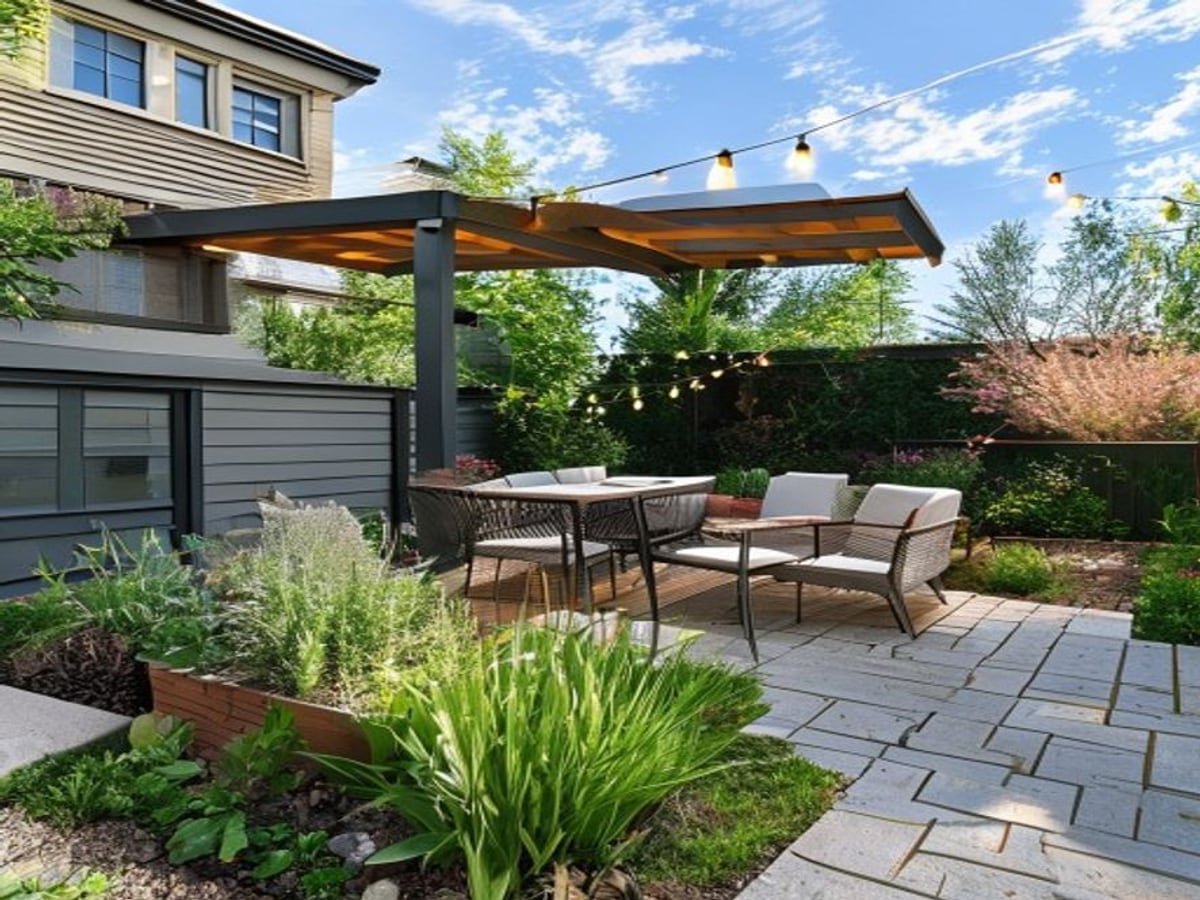
The fastest way to get an AI patio design is to upload a straight-on photo of the area you want to pave, tell the planner the surface and use you have in mind (a dining patio, a lounge, a fire-pit zone), and generate a few directions you can compare side by side. You get a visual concept in seconds, not a contractor quote.
Treat the result as a design conversation starter, not a build plan. A concept image is excellent for deciding paver color, patio shape, where shade should go, and how furniture will fit. It cannot measure your slope, confirm drainage, or check setback rules, so the real decisions still happen on site with a tape measure and, for larger jobs, a contractor.
If you only remember one thing: size the patio to the furniture and circulation you actually need first, then pick the surface, then layer shade and lighting. Most patios that feel cramped were drawn around a fixed footprint instead of around how people move and sit.
How it works
Take a clear, eye-level photo of the area you want to pave, ideally with the house and any doors in frame so scale and the route from indoors are visible.
Say what the space is for (dining, lounge, fire pit), the rough surface you like (pavers, flagstone, gravel, composite deck), and any shade preference like a pergola or umbrella.
Create a few directions and put them side by side. Look at patio shape, surface color, seating layout, and how planted edges or shade change the feel of the space.
Bring the concept you like to a tape-measure walkthrough and, for masonry or decks, a local contractor who can check grading, drainage, and code.
Compare a paver patio, natural flagstone, a gravel sitting area, or a composite deck transition. The concept shows color, joint pattern, and how the surface reads against the house, which is the hardest thing to picture from a material sample.
Use the layout to think in zones: a dining set needs room to pull chairs out, a lounge needs walking room around it, and you need a clear path from the back door. Spacing, not square footage, is what makes a patio feel comfortable.
A pergola, umbrella, or a well-placed tree changes how usable a patio is in the afternoon. Planted borders and containers soften hard edges so the patio feels designed into the yard instead of dropped onto it.
What changes, what stays
Before you build
Plan from the seating out, not the slab in. A four-seat dining set generally needs a clear zone roughly 10 to 12 ft across so chairs can pull back without falling off the edge, and a lounge grouping wants 3 ft of walking room around it. A concept that looks generous on screen can be tight once real furniture and a 36 in main path are added, so sketch the actual pieces onto the plan before sizing.
As rough, region-dependent ranges: poured concrete and gravel sit at the lower end, concrete pavers in the middle, natural flagstone and composite decking higher. Drainage matters as much as price: gravel and open-jointed pavers let water soak in, while solid concrete sheds it, so a slab needs a deliberate slope (commonly about a quarter inch of fall per foot away from the house) and somewhere for runoff to go.
Permeable pavers and gravel let rainwater infiltrate instead of running off, which can ease pooling, protect a foundation, and in some areas help with stormwater rules or impervious-surface limits. The trade-off is a deeper base of open-graded stone and periodic cleaning of the joints. Check local rules, because some HOAs and municipalities cap how much hard surface a lot may add.
A west-facing patio bakes in late-day sun, while a north-facing one can stay cool and damp. Note where the sun lands at the hours you will actually use the space, then plan shade to match: a pergola or sail for overhead heat, a deciduous tree for summer shade that lets winter light through. Honest disclosure: every image here is a visual concept, not a construction drawing or permit document.
What to test
AI Yard Planner is strongest when it helps you compare visual directions. Before building, check climate, utilities, drainage, grading, permits, and plant availability.
Trusted references
Independent sources worth reading before you commit to plants, grading, or materials:
Questions
It visualizes material direction such as concrete pavers, natural flagstone, gravel, or a composite deck so you can compare the look. Final choice should weigh climate, drainage, budget, and installation, since those vary by site and region.
Size it to the furniture and circulation you need. A four-seat dining set generally wants a clear zone around 10 to 12 ft across, plus walking room. Use the concept for layout, then confirm with a tape measure and the actual pieces.
Permeable pavers and gravel let rainwater soak into the ground, which can reduce pooling and runoff, while solid concrete sheds water and needs a deliberate slope away from the house. Permeable surfaces need a deeper stone base and occasional joint cleaning.
No. Treat the image as visual direction for layout thinking. Measure your furniture, doorways, and the main path, then check the fit on site before building.
No. Every result is a visual concept, not a construction drawing or permit document. For masonry, decks, drainage, and grading, confirm with a local contractor and your municipality.
Yes. Add a note asking it to keep the existing patio and focus on shade, planting, furniture, or lighting instead of repaving.
Keep exploring
Reimagine the whole backyard, with the patio as one zone among lawn, beds, and play space.
Plan the planting beds and borders that frame and soften a patio edge.
Apply the same photo-to-concept approach to a front entry or courtyard patio.
See how the upload-a-photo approach works across any outdoor space.
Try outdoor concepts at no cost before paying for a full design.
Browse real patio and yard transformations generated from photos.
Compare tools and see where a photo-first patio planner fits.
AI Yard Planner