1
Upload a front photo
Use a wide shot taken from the sidewalk or street that shows the front door, windows, walkway, and where the driveway meets the yard.
AI front yard design
Front yard design is about the first read of your house from the street. AI Yard Planner lets you test entry paths, foundation planting, layered beds, and path lighting on a photo of your own home, so you can compare directions before committing to a landscaper or a weekend of digging.
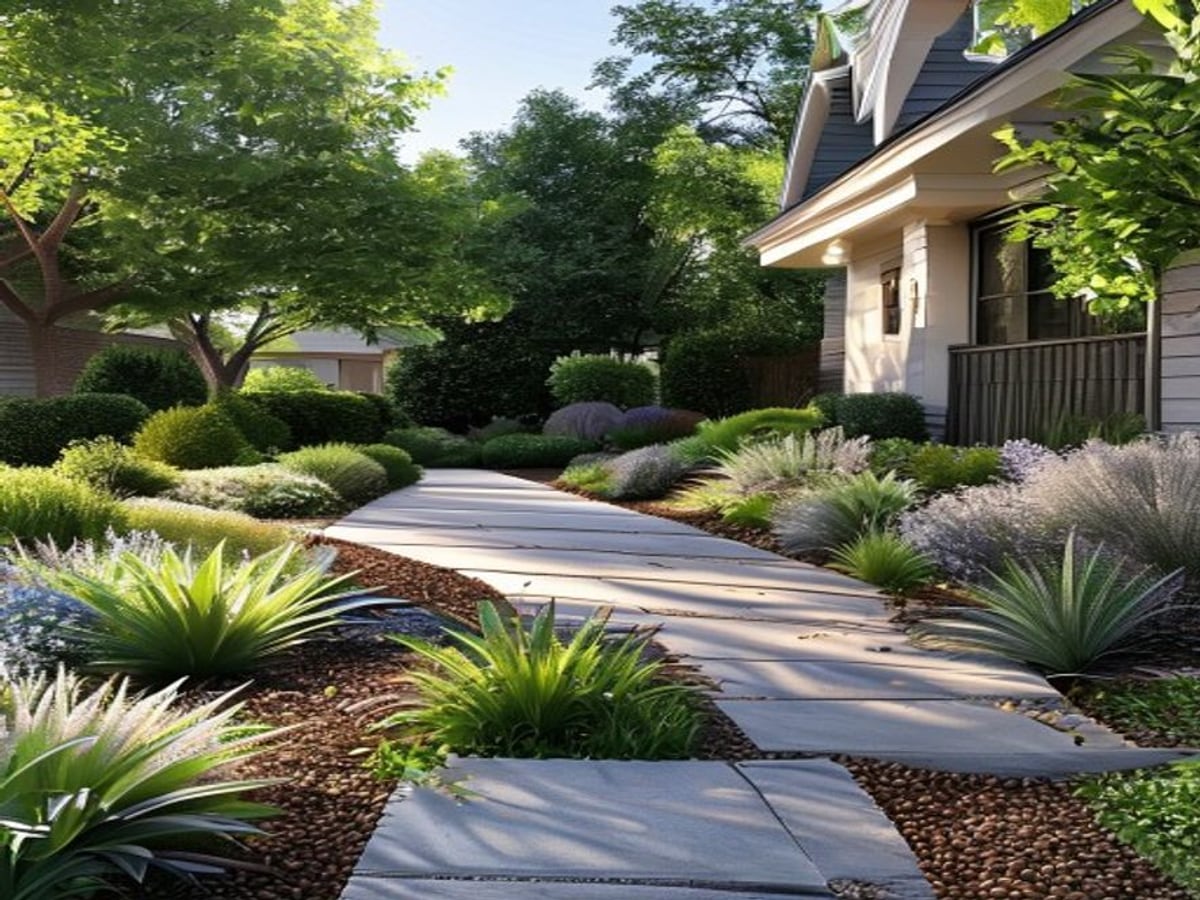
AI front yard design turns a single photo of your home into visual concepts for the front: a clearer entry path, foundation planting that frames the facade, layered beds, and lighting along the walk. It is the fastest way to compare looks side by side before you spend on materials or labor.
For curb appeal, the highest-leverage moves are usually a legible front walk, repeated planting instead of many one-off specimens, and keeping windows, the front door, and the house number visible. AI Yard Planner is built to test exactly those changes on your real entrance.
Treat the result as a visual concept, not a construction drawing or a permit document. It is a planning aid for direction and conversation, not engineered plans for drainage, grading, or structure.
How it works
Use a wide shot taken from the sidewalk or street that shows the front door, windows, walkway, and where the driveway meets the yard.
Choose a direction such as low-maintenance, cottage layering, or a clean modern entry, and point the design at the walk, beds, or foundation planting.
Get concepts back and compare them side by side. Look at sight lines from the street to the door and whether plants stay clear of windows and the address.
Bring the concept to a local nursery, extension office, or installer to confirm plant choices, drainage, setbacks, and cost for your area.
A front yard reads best when the eye is led from the street and driveway straight to the door. AI can widen or reshape the walk and stage a small landing so the entrance is obvious, while keeping the path off the foundation and clear of downspout splash zones.
The biggest curb-appeal mistake is shrubs that grow up over windows and the door. Plan foundation planting by mature height, not nursery-pot size: keep beds under windowsills, leave the front door framed not screened, and never bury the house number or porch light.
Layered beds use a low front edge, mid-height perennials and grasses, and a few taller anchors near corners. Repeating three to five plant types instead of one of everything makes a small front yard look intentional and is far easier to maintain.
What changes, what stays
Before you build
Aspect drives plant choice. A north- or east-facing front yard gets less direct sun and suits shade-tolerant plants like hostas, ferns, and many native woodland perennials; a south- or west-facing entrance bakes in afternoon heat and rewards drought-tolerant, full-sun choices. Check your USDA hardiness zone for what survives winter, then match plants to the light your entrance actually gets.
For an entry walk, poured concrete is typically the cheapest hard surface but sheds water toward the house or lawn. Permeable pavers cost more and need a deeper gravel base, but they let rain soak in instead of running off, which matters if the front yard slopes toward the foundation. Both need a slight grade away from the house; some towns also credit permeable surfaces against stormwater rules. As a rough, region-dependent range, an installed walkway often runs from the low-to-mid double digits per square foot for concrete to noticeably more for paver systems.
The strip between your sidewalk and the street is often public right-of-way with its own planting rules, and tall plantings near a driveway or corner can block sight lines for drivers and pedestrians. Many areas restrict plant height near corners and driveway aprons. Confirm the front setback and any right-of-way or HOA rules before adding hardscape or tall hedges near the property line.
Low maintenance comes from spacing plants for their mature size, grouping by water need, and mulching beds two to three inches deep to hold moisture and suppress weeds. Picking native and drought-tolerant species reduces watering and feeds local pollinators. Keep roots of larger shrubs and trees away from the foundation, walkway, and any buried utilities, and call your local 811-style line before digging.
What to test
AI Yard Planner is strongest when it helps you compare visual directions. Before building, check climate, utilities, drainage, grading, permits, and plant availability.
Trusted references
Independent sources worth reading before you commit to plants, grading, or materials:
Questions
Yes. It is most useful for comparing visual directions such as entry walkways, foundation planting, bed shapes, and lawn reduction before you buy materials. It shows you a clear before-and-after read of the house from the street.
Plan foundation planting by mature height rather than the size at the nursery. Keep beds under the windowsill line, frame the front door instead of screening it, and leave the house number and porch light visible. You can test these heights on your own photo first.
Concrete is usually cheaper but sheds water; permeable pavers cost more and need a deeper base but let rain soak in, which helps if your front yard slopes toward the house. Either way, grade the surface away from the foundation and confirm local stormwater and setback rules.
A north- or east-facing entrance gets less direct sun, so shade-tolerant plants such as hostas, ferns, and many native woodland perennials do well. Check your USDA hardiness zone for cold tolerance and confirm choices with a local nursery or extension office.
No. The output is a visual concept to guide direction and conversation, not a construction drawing or permit document. Confirm drainage, grading, setbacks, utilities, and plant availability locally before building.
Yes. A wider photo usually works better for front yards because it shows the house, windows, front door, walkway, and where the driveway meets the yard together, giving the concept more context to work with.
Keep exploring
Focus tools and ideas for lifting the street-facing read of your home.
Plan patios, planting, and living space for the back of the house.
Lay out beds, borders, and planting schemes from a photo.
Turn a single yard photo into visual design concepts.
Start exploring outdoor design directions at no cost.
Browse before-and-after front and back yard concepts.
Compare plans for generating more concepts and higher detail.
AI Yard Planner