Yard planning guide
Front Yard Curb Appeal on a Budget: What Pays Off
A landscape designer ranks front-yard curb appeal upgrades by cost vs. impact, with directional price tiers, low-maintenance plants, and what to skip.
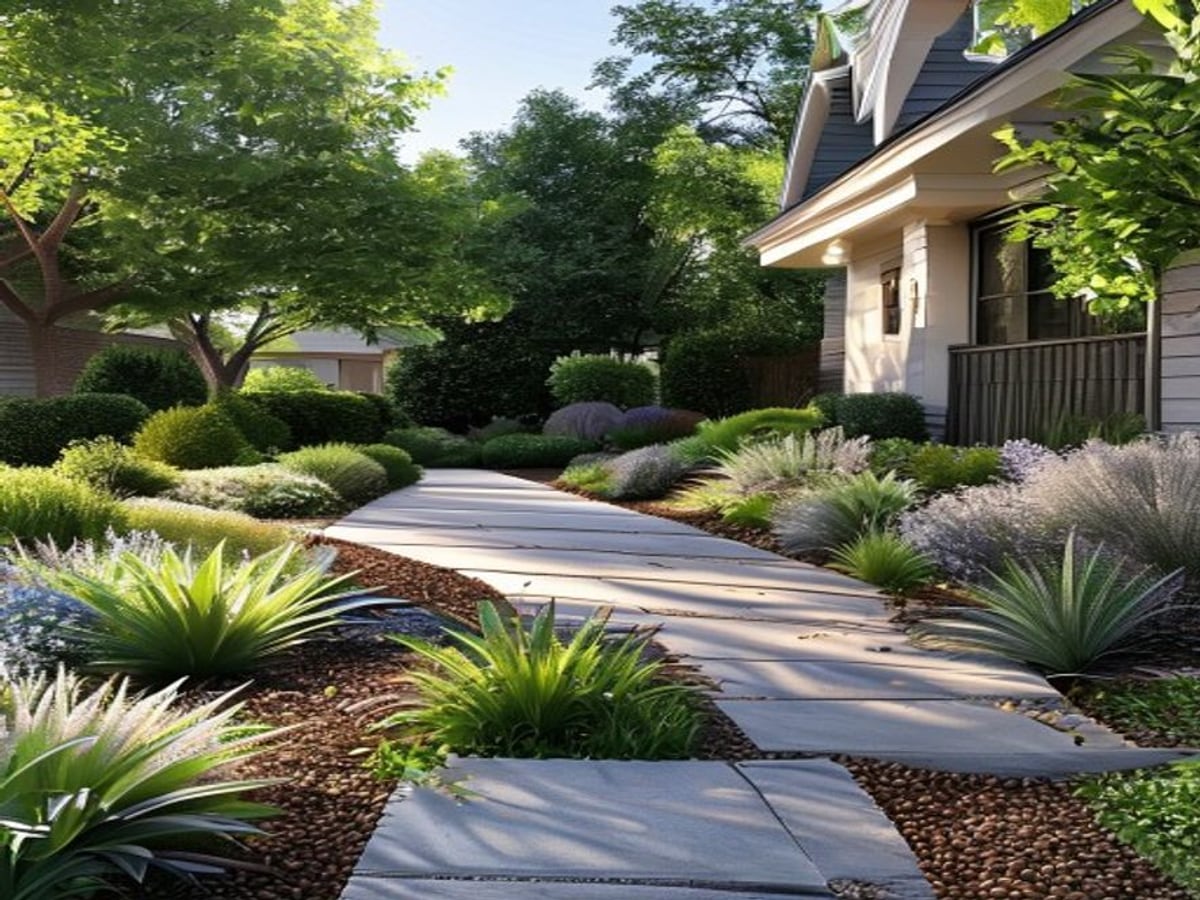
The single highest-return way to spend a limited front-yard budget is not new plants, a water feature, or a fresh fence. It is edges and tidiness first, then one strong focal point, then foundation planting — in that order. Crisp bed edges, fresh mulch, and a single well-placed flowering tree or anchored entry will read as “cared for” from the street far more reliably than scattering twenty small plants across the lawn. If you want to picture how those moves actually land on your specific house before spending a dollar, this article pairs well with our overview of curb appeal AI previews, which is the visual side of the decision. Here we focus on the money side: where each dollar goes furthest.
This is written for the realistic case — a few hundred to a couple thousand dollars, one or two weekends, and no contractor. Every cost below is a directional range, not a quote. Prices swing hard by region, season, plant size, and whether you do the labor yourself. Treat them as “what order of magnitude is this,” not “what I will pay.”
The core idea: spend on perceived order, not quantity
First impressions are formed in seconds from the curb. A viewer is not auditing your plant collection — they are reading a few coarse signals: are the edges clean, is the entry obvious and inviting, does the planting look intentional rather than accidental. Cheap front yards usually fail on order, not on budget. They have plenty of plants, but no defined beds, no rhythm, and no focal point, so the eye has nowhere to land.
So before buying anything, do the free work: pull weeds, cut a clean edge on every bed, prune anything blocking the door or windows, and remove dead or half-dead shrubs. In many yards this alone moves the needle more than the next $300 of plants would. Only after the canvas is clean does it make sense to add.
Budget tiers: what each dollar amount can change
Here is how I’d sequence spending, framed as “every X dollars buys roughly Y effect.” Do the cheaper, higher-leverage rows before the expensive ones. All ranges are rough and regional.
| Upgrade | Directional cost (DIY) | What it changes | Leverage |
|---|---|---|---|
| Clean bed edges + weed/prune | $0–30 (tools/your time) | Instantly reads “maintained”; defines every bed | Highest |
| Mulch refresh (2–3 cu yd) | ~$60–180 bulk, more bagged | Unifies beds, suppresses weeds, makes plants pop | Very high |
| Crisp lawn repair / overseed patch | ~$30–80 | Removes the “tired yard” signal | High |
| Front-door paint + clean hardware | ~$30–70 | New focal point at the entry, near-free drama | High |
| Foundation planting (5–7 shrubs) | ~$120–350 | Grounds the house, hides the foundation line | High |
| One flowering ornamental tree | ~$80–250 (small caliper) | Real focal point + seasonal interest | Medium–high |
| Path / step lighting (solar or low-voltage) | ~$60–250 | Evening curb appeal, safety, “finished” feel | Medium |
| Defined entry path or stepping stones | ~$150–500+ | Guides the eye to the door | Medium |
| Symmetrical planters flanking the door | ~$60–200 | Frames the entry, easy seasonal swaps | Medium |
| New beds carved into lawn | $50–200 (mostly labor) | More planting area, but raises upkeep | Lower (cost) |
A practical reading of this table: if you only have a single weekend and around $150, spend it on edging, a mulch refresh, and door paint. That trio is almost impossible to beat on cost-per-impression. Save the tree, lighting, and new beds for a second round once the bones look intentional.
A second practical note: buy mulch and soil in bulk rather than bags whenever the volume justifies it. Bagged mulch is convenient for a single small bed, but the per-cubic-yard cost is dramatically higher, and a typical front yard needs more than people expect — a 2-inch layer over 200 square feet is already about 1.25 cubic yards. If a local supplier delivers bulk, the savings often pay for the delivery fee several times over. The same logic applies to plants: a single trip to a wholesale or end-of-season nursery sale usually beats piecemeal big-box purchases, and late-season clearance is when shrubs and perennials are cheapest because nurseries don’t want to overwinter inventory.
It also helps to phase the budget across seasons rather than spend it all at once. Early spring is the moment for edging, mulch, and structural shrubs while plants are dormant and cheap. Fall is ideal for planting trees and dividing perennials, since cooler soil reduces transplant stress and establishment is more reliable. Spreading the work this way lets a modest yearly budget compound — last season’s divided perennials become this season’s free fill — instead of front-loading everything into one expensive weekend that strains both the budget and the plants.
Step-by-step: a one-weekend, low-budget plan
- Audit from the curb. Stand where a visitor or buyer first sees the house. Photograph it. The camera flattens the scene and shows you what actually reads — usually clutter and fuzzy edges, not the things you obsess over up close. (For getting usable reference shots, see how to photograph your yard for AI landscape design.)
- Subtract before you add. Remove dead plants, overgrown foundation shrubs swallowing the windows, random pots, and anything that breaks the line of the house. Subtraction is free and often the biggest single improvement.
- Cut clean edges. Re-cut a defined, slightly trenched edge on every bed with a flat spade or half-moon edger. This one move makes existing planting look deliberate.
- Refresh mulch. Apply 2–3 inches of a single, consistent mulch across all beds. Keep it pulled back a few inches from trunks and the foundation — piled “mulch volcanoes” against bark invite rot and pests.
- Set one focal point. Either paint the front door a confident color, add a matched pair of planters flanking the entry, or plant one small flowering tree where it draws the eye toward the door. Pick one; do not do all three at once on a tight budget.
- Plant the foundation line. Add a simple, repeated grouping of shrubs along the base of the house to ground it. Repetition of a few species beats variety here.
- Finish with light. A few solar or low-voltage path lights extend curb appeal into the evening and make the entry feel safe and complete.
Plant choices: low maintenance, regionally honest
On a budget, the worst outcome is buying plants that die or need constant fussing. Two rules keep that from happening. First, match plants to your USDA hardiness zone — a plant rated outside your zone is a recurring expense, not a one-time one. Check your zone with the official USDA Plant Hardiness Zone Map before you buy. Second, favor regional natives, which are adapted to local rainfall and soil and generally need less water, less fertilizer, and less replacement. The NWF Native Plant Finder lets you search natives by ZIP code, and if you want the planting to support pollinators while it looks good, the Xerces Society pollinator guidance is a credible starting point.
Some broadly reliable, low-fuss categories for front-yard structure (always confirm against your zone and sun exposure):
| Role | Examples (verify for your zone) | Why it works on a budget |
|---|---|---|
| Evergreen structure | Boxwood, inkberry holly, dwarf yaupon | Year-round form; defines beds without seasonal gaps |
| Flowering shrub | Hydrangea, ninebark, native viburnum | Long display, minimal pruning, strong “wow” per dollar |
| Small flowering tree | Eastern redbud, serviceberry, crape myrtle (warm zones) | One specimen creates a focal point and shade |
| Tough perennials | Coneflower, black-eyed Susan, daylily, sedum | Spread over time, so a few plants fill in for free |
| Groundcover / filler | Creeping thyme, low sedge, native grasses | Covers bare soil, cuts weeding and mulch refills |
The budget trick with perennials and groundcovers is division. Many spread and can be split after a year or two, so an initial small purchase multiplies into free fill for the rest of the yard. Buying smaller plant sizes (quarts and gallons instead of larger containers) also saves money and they often establish faster — patience converts directly into dollars saved.
On water: choosing drought-tolerant, regionally appropriate plants is also the cheapest long-term move, since irrigation is a recurring cost. The EPA’s WaterSense landscaping tips cover grouping plants by water need and reducing thirsty turf — both of which lower upkeep while keeping the front looking lush.
Composition: symmetry, repetition, one focal point
Cheap-looking yards are usually busy yards. The fixes are compositional and free:
- Repeat, don’t collect. Three of the same shrub spaced evenly reads as designed; one each of three different shrubs reads as leftovers. Repetition is the cheapest way to look professional.
- Frame the entry. The front door should be the obvious destination. Symmetry helps here — matched planters, paired shrubs, or balanced bed shapes on either side of the path pull the eye to the door.
- Give it one focal point. A single flowering tree, a bold door color, or a specimen shrub. More than one and they compete; the yard feels noisy.
- Layer by height. Taller anchors near the house, mid-height in the middle, low edge plants at the front of the bed. This simple front-to-back gradient makes even inexpensive planting look composed.
If you want to test these moves visually before committing money or plants, our AI Yard Planner and the dedicated AI front yard design page let you generate concept images of different focal points and bed shapes on a photo of your actual house. Treat the output as a visual concept, not a construction plan — it will not check your drainage, slope, sun angles, setbacks, or any local permit requirements. Use it to choose a direction, then validate the practical details on site.
The ROI angle: what matters when you’re selling
If the goal is listing the house, the budget priorities shift slightly toward universal, neutral “move-in ready” signals rather than personal taste. Buyers form an impression before they’re through the door, and the cheapest reliable wins are the same first-impression items: a clean, edged, freshly mulched front bed, a tidy and obvious entry, and a healthy-looking (not necessarily perfect) lawn.
For selling specifically, lean into low-risk, broad-appeal moves: neutral mulch, simple symmetrical planting, a clean door, working lights at dusk for evening showings. Avoid highly personal choices on the way out the door — a bold xeriscape, a koi pond, or an unusual color scheme might be exactly your taste but can read as “project” to a buyer and won’t return the spend. The boring, tidy version converts better at sale time.
What to skip on a budget
Just as important as where to spend is where not to:
- Skip wholesale lawn replacement unless the turf is genuinely failing. Patch and overseed instead — it’s a fraction of the cost.
- Skip water features. Fountains and ponds are expensive to build and to maintain, and rarely move the curb-appeal needle relative to cost.
- Skip annual-heavy color schemes if budget is the constraint. Annuals are a recurring yearly expense; spend on perennials and shrubs that come back.
- Skip resurfacing the driveway. A clean (pressure-washed) driveway and tidy edges usually look fine; full repaving is a major cost with modest curb-appeal return unless it’s badly damaged.
- Skip touching the house facade and roof. Painting siding or replacing the roof is a renovation, not a landscaping budget — and clean planting often makes a dated facade look intentional anyway. Preserve and frame what you have rather than competing with it.
- Skip buying large specimen plants. Big container sizes cost far more for a head start you’ll erase in a year or two of growth.
When budget curb appeal doesn’t work
Be honest about the limits. If the house itself is the problem — peeling paint across the whole facade, a failing roof, broken gutters — no amount of mulch and edging will fix the first impression, and the money belongs on the building first. Likewise, if your front yard has a real functional defect — standing water, erosion on a slope, deep shade where nothing grows — planting over it just hides a problem that resurfaces. Those need drainage or grading work, which is a different budget and often a different trade.
And if you’re chasing a specific look that depends on hardscape — a new patio, a retaining wall, a paver walk — that is genuinely capital-intensive and won’t fit a few-hundred-dollar plan. Recognize when you’ve crossed from “curb appeal refresh” into “renovation,” and plan accordingly rather than under-funding both.
FAQ
What’s the single cheapest thing that improves curb appeal the most? Clean, defined bed edges plus a fresh layer of mulch. It costs very little, takes a weekend, and makes existing plants look intentional. It outperforms almost any same-priced plant purchase because it fixes the “order” signal that the eye reads first from the street.
How much should I budget for a noticeable front-yard refresh? A meaningful refresh is achievable in the low hundreds: roughly the cost of mulch, a few shrubs, and door paint or a pair of planters. Spending into four figures buys a focal-point tree, lighting, and a defined path. These are directional ranges that vary widely by region and plant size — confirm local prices before committing.
Which plants give the best curb appeal for the least maintenance? Region-appropriate natives and tough perennials matched to your USDA hardiness zone and sun exposure: evergreen structure shrubs for year-round form, one flowering shrub or small tree as a focal point, and spreading perennials or groundcover to fill in over time. Natives generally need less water and less replacement, which keeps the long-term cost down.
Does curb appeal landscaping pay off when selling a house? Tidy, neutral front-yard work — edged beds, fresh mulch, a clean entry, a healthy lawn, working dusk lighting — reliably improves first impressions for buyers and is low-cost. Highly personal or high-maintenance features (water features, unusual schemes) tend not to return their cost, so lean broad and neutral when listing.
Can I see how changes will look before I spend money? Yes — take a clear photo from the curb and generate concept images of different focal points, bed shapes, and plantings with AI Yard Planner. It’s useful for choosing a direction, but the output is a visual concept, not a construction document: verify drainage, slope, sun, setbacks, and permits on site. For the bigger picture on previewing exterior changes, start with our guide to curb appeal AI previews, and if you’re tackling the back of the house next, the same budget logic applies in our low-maintenance backyard landscaping ideas.